Pet costume look
Baked Potato Pet
Dress a dog or cat in a soft baked-potato costume with a butter pat and chives while keeping the breed, fur and markings. Prompt and browser generator.
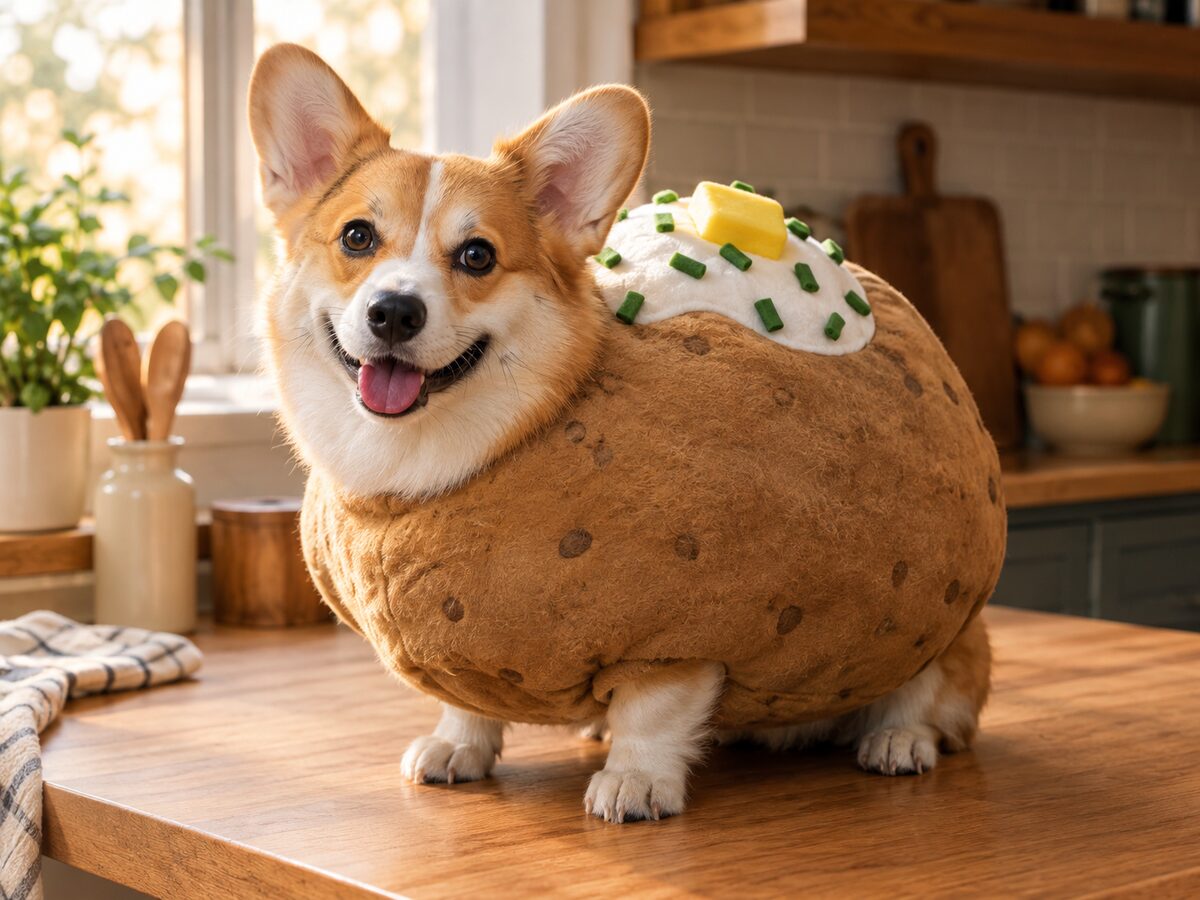
A baked-potato pet costume is a silhouette joke: a rounded tan body, a butter pat and a few chives. The joke only works if the pet still looks like the pet, so the face, ears, fur color and markings need to stay intact.
This look uses one clear pet photo and a soft plush costume. It works best on a seated portrait with the full head and chest visible, and it needs a warm kitchen background rather than a dark studio.
What changes
Costume: a rounded tan plush baked-potato body with a small butter pat and chive details.
Pose: the pet sits naturally with the face and ears fully visible.
Setting: a cozy kitchen counter with warm window light and a few props.
Texture: realistic fur and soft fabric instead of a cartoon potato.
Prompt recipe
This is model input, so it stays in English. Change the wardrobe, scene and light lines; keep the identity and anatomy lines.
Use the uploaded pet photo as the primary reference. Preserve the animal's original breed, fur color, distinctive markings, eye color, facial appearance and natural anatomy. Dress the pet in a soft, rounded baked-potato costume in warm tan plush, with a small butter pat and a few chive details on top. Keep the face, ears and paws visible and the costume fitted naturally without covering the eyes. Place the pet on a cozy kitchen counter with warm window light, a linen cloth and a few subtle autumn props. Create a photorealistic professional pet portrait with realistic fur and fabric texture and shallow depth of field. Keep the same number of animals as the uploaded photo. Avoid extra animals, extra paws, duplicated limbs, changed breed, changed markings, text, logos and watermarks.
Negative prompt
Cartoon potato, food mascot, plastic costume, changed breed, changed markings, extra animals, extra paws, distorted face, text, logo, watermark.
Image-to-video prompt
Use the provided image as the exact starting frame. Five-second pet portrait: the pet blinks and makes one small head tilt, the ears move naturally, warm window light shifts slightly, one slow push-in. Keep the breed, fur markings, costume and background consistent. Maintain realistic motion, stable anatomy and consistent lighting. Do not change identity, replace the costume, add characters or introduce sudden scene cuts. No text or watermarks.
Try it in the browser
The generator below is already set to the right mode and prompt. Upload a photo, check the cost, then generate.
How to get a clean result
Use a seated photo
A clear seated portrait with the full head and chest visible gives the costume a natural shape.
Keep the face uncovered
Describe the costume as a body around the pet, not a hood. The eyes, ears and muzzle must stay visible.
Check the paws and eyes
Re-run with fewer props if paws merge or the eye color changes. The breed and markings should still match the photo.
Best for
- A funny Halloween card or social post
- A costume preview without buying a pet outfit
- A matching look for a multi-pet household
- A short video with a simple head tilt
Limits to plan around
- The model does not measure real pet sizing or comfort.
- Small chive and butter details can merge at low resolution.
- A dark pet on a dark background loses the costume silhouette.
- Do not use a real person's pet photo without permission.
Questions
Will my pet's breed and markings stay the same?
The prompt explicitly preserves breed, fur color, markings, eye color and facial appearance. Always check the face and chest pattern against the original photo.
Can I use a cat instead of a dog?
Yes. The costume is body-shaped, not breed-specific. A seated cat photo with a clear face works well.
Why did the costume cover the face?
The model treated it as a hood. Say "body costume with the face and ears fully visible" and add "no hood" to the negative prompt.
Can I animate the pet portrait?
Yes. Keep the motion to a blink, a small head tilt and a light shift. Running or jumping usually breaks the costume and anatomy.
Generate this look
The generator below is already set to the right mode and prompt. Upload a photo, check the cost, then generate.