Celestial gown look
Cosmic Princess
Generate a celestial princess portrait with a midnight-blue gown, silver stars and a moonlit observatory. Prompt, negative prompt and video step.
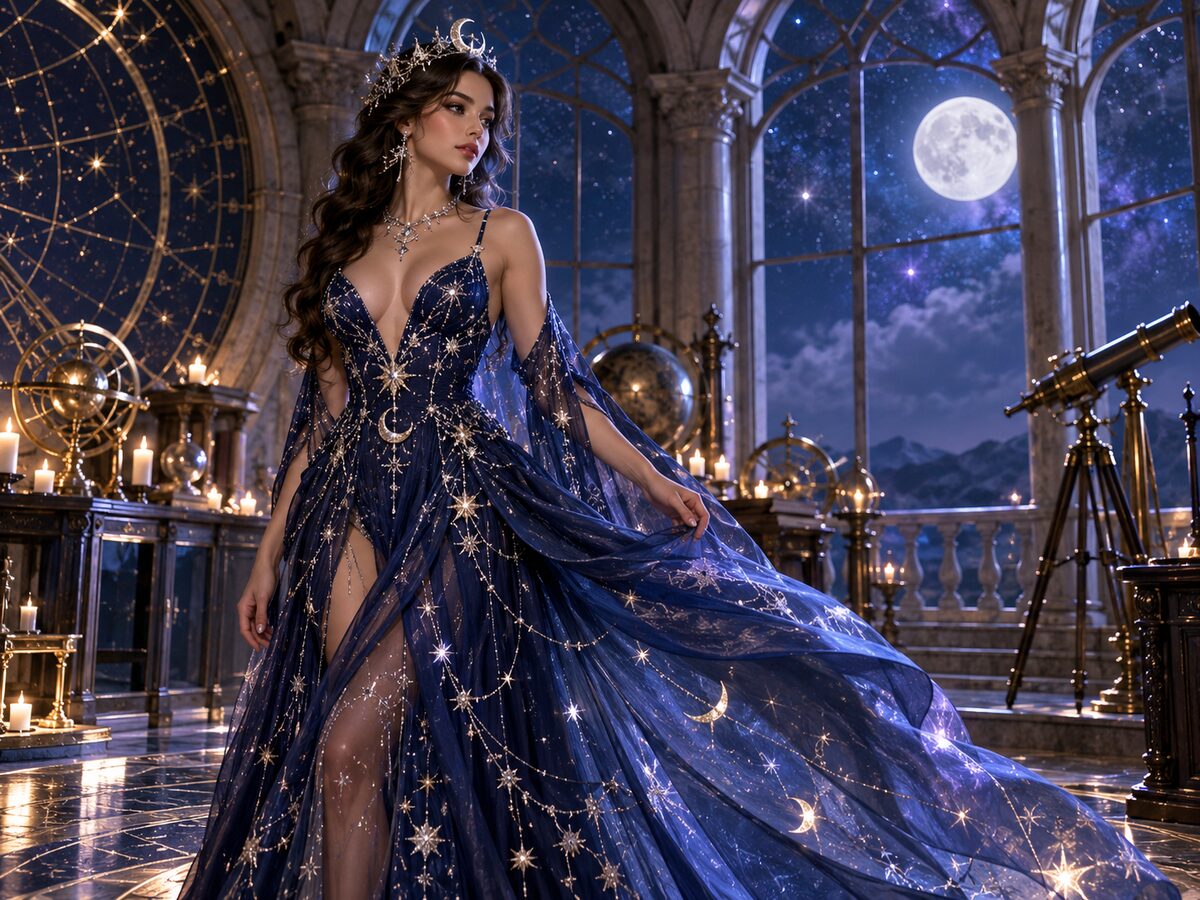
A glowing gown is a lighting problem before it is a costume problem. If the stars are painted on, the dress looks flat. If the glow is everywhere, the face loses its shape. The useful version keeps the fabric readable, puts the light on the embroidery and leaves the face lit by a separate, softer source.
This look is built for a three-quarter portrait with visible shoulders. The observatory background gives the gown a reason to glow, and the silver crown adds a vertical line without covering the hairline.
What changes
Wardrobe: a midnight-blue fantasy gown with silver embroidery and softly glowing star patterns.
Accessories: a delicate silver moon crown and small luminous details.
Setting: a moonlit observatory with tall windows and a starry sky.
Light: cool rim light on the gown, soft face light and a deep blue-silver-violet palette.
Prompt recipe
This is model input, so it stays in English. Change the wardrobe, scene and light lines; keep the identity and anatomy lines.
Edit the uploaded photo into an original celestial Halloween princess portrait. Preserve the subject's recognizable face, natural skin texture, body proportions and pose. Replace the outfit with a midnight-blue fantasy gown featuring silver embroidery, softly glowing star patterns and realistic flowing fabric. Add a delicate silver moon crown and small luminous accessories. Place the subject inside a moonlit observatory with a starry sky visible through tall arched windows. Use elegant fantasy fashion photography, realistic fabric details, cinematic rim lighting and a deep-blue, silver and violet color palette. Keep the person recognizable. Keep the same number of people as the uploaded photo. Avoid altered facial identity, extra limbs, duplicated fingers, distorted anatomy, text, logos and watermarks.
Negative prompt
Flat printed stars, glowing skin, neon overload, cartoon, plastic fabric, extra people, extra fingers, distorted hands, text, logo, watermark.
Image-to-video prompt
Use the provided image as the exact starting frame. Five-second celestial portrait: the star embroidery pulses softly, the gown fabric moves in a slow draft, the subject turns her head slightly toward the camera, one smooth push-in. Keep the face, gown and observatory consistent. Maintain realistic motion, stable anatomy and consistent lighting. Do not change identity, replace the costume, add characters or introduce sudden scene cuts. No text or watermarks.
Try it in the browser
The generator below is already set to the right mode and prompt. Upload a photo, check the cost, then generate.
How to get a clean result
Keep the face light separate
Ask for soft face light and cool rim light. If the gown glow lights the face, the portrait starts to look like a poster.
Describe fabric before stars
Name the fabric, embroidery and flow first. Stars are an accent, not the whole dress.
Check the crown edge
A crown can merge with the hairline. If it does, make it smaller or remove it and keep the earrings.
Best for
- A fantasy Halloween portrait with a polished editorial feel
- A costume concept for a photo shoot
- A character look for a short video
- A couple or group set with a celestial theme
Limits to plan around
- The model does not know real couture construction or fabric behavior.
- Tiny stars can alias or disappear after compression.
- A full-body shot makes the face too small for a strong identity match.
- Avoid naming a copyrighted princess or a specific film costume.
Questions
Can I make the gown a different color?
Yes. Change midnight blue to emerald, burgundy or black, but keep the silver embroidery and the separate face light.
Why do the stars look printed on?
The prompt needs fabric, embroidery and glow language. A flat star pattern without material detail reads as a print.
Can I use a full-body photo?
You can, but the face will be smaller and identity preservation gets harder. A three-quarter crop is the safer first test.
Is this a specific copyrighted character?
No. The look is an original celestial princess concept. Describe traits, not a studio-owned character or a living artist.
Generate this look
The generator below is already set to the right mode and prompt. Upload a photo, check the cost, then generate.